Find out which of your leads actually close. For free.
Send a year of your leads with closed won or lost status and deal amounts. I score every one and show you whether the top tier is where your revenue actually came from. You keep the model and the report either way.
Book a time, send your file after booking, and I will have the report ready to walk through on the call. No cost, no data fees, no commitment.
The last time we ran this, they rebuilt their sales process around the result.
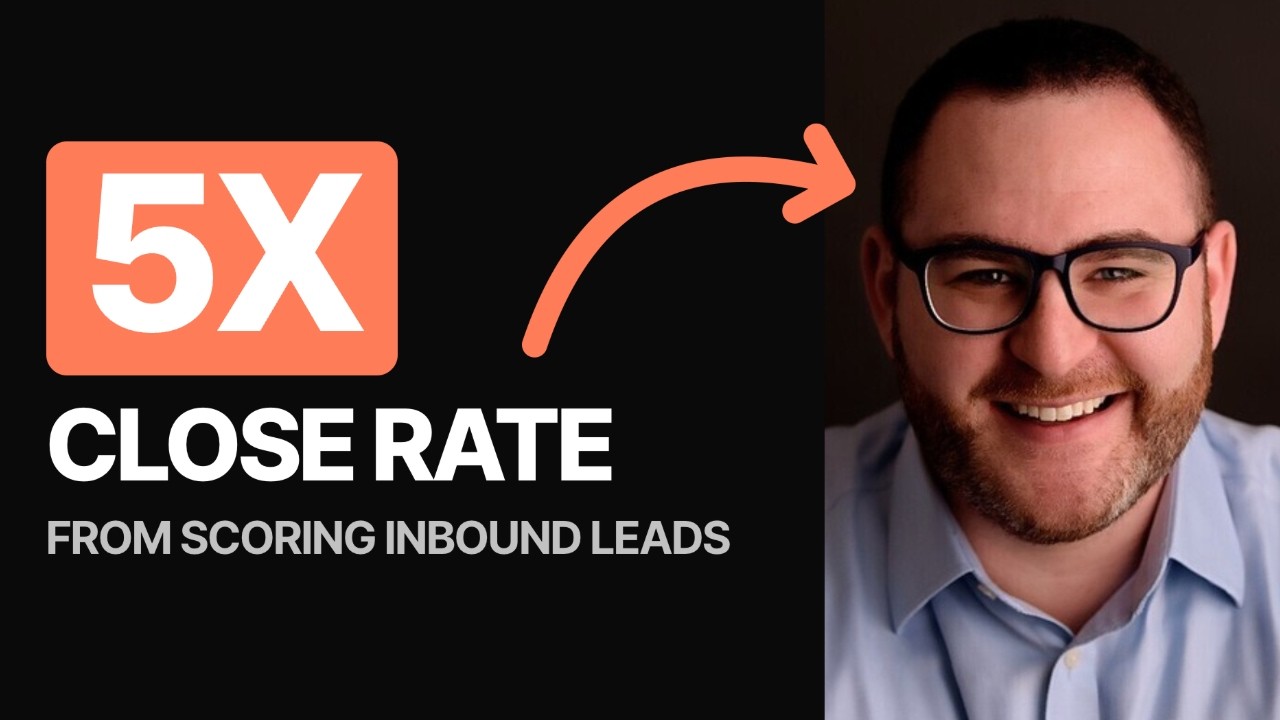
WareSpace had more inbound than two reps could work and no way to tell which leads deserved the time. We scored their entire history against what actually closed. Their CMO explains what happened next.
 2:22
2:22
"Anyone who has scored a three is more than five times likely to go from a lead to a customer."Eric Golman, WareSpace
Your reps work leads in the order they arrive. That is the problem.
Most teams have no way to triage inbound, so the queue is whoever showed up first. Reps get bogged down on leads that were never going to buy, while the ones that would have closed sit unworked or go cold waiting for a reply. You already have everything needed to prove it, because you know which of last year's leads became customers and what they were worth.
Send a year of leads
Export your inbound leads from the last 12 months with the outcome on each one: closed won, closed lost, and the deal size. Churn too if you have it.
We enrich every one
Company size, industry and segment, company type, location, website status, parent company, LinkedIn, email validity. On the person: job function and seniority. All the things your form never asked for.
We score and tier them
A fit model built on your data, not a template. It scores who the lead actually is. Every one lands in a tier, with junk screened out.
We check the scores against reality
Then the part nobody does: we compare each tier against who actually closed and for how much. If the model predicts revenue, you will see it in your own numbers.
What lands in your inbox.
-
The tier table. Close rate and average deal size by score tier across your own book, so you can see whether the model finds the revenue, not just the conversions.
-
Your missed leads. The Tier 1 leads from last year nobody worked or got to late. Named, with the deal size of the ones like them that did close.
-
The junk you paid attention to. How much of your reps' time went to leads the screen would have caught, in hours and in meetings.
-
The fit model itself, written down. Every field, weight, and threshold. Yours to keep and hand to your own team if you want to build it in-house.
-
A walkthrough video, then the call. I record myself walking the whole report before we meet, so our 20 minutes is about what to do rather than what it says.
Industry and headcount came from enrichment, not from anything the lead filled in.
What to send, exactly.
Once you have booked, you will get a link to send this over. One CSV, one row per lead, covering the last 12 months. Nothing else is needed to run the report.
- Company name
- Company domain this is what the enrichment runs on, so it matters most
- Job title
- First and last name optional
- Email optional
- Closed won or closed lost tells us if the score predicts a sale
- Deal size tells us if it predicts a good one
- Churned, yes or no if you have it, tells us if it predicts a keeper
Anything else you have is a bonus: source, form fields, dates, rep owner. More columns means a sharper model.
If privacy is the concern, the minimum that works is company, domain, job title, outcome, and deal size. Names and emails are not needed for the model at all. I am happy to sign an NDA before you send anything.
Your file is processed on our own infrastructure, never resold, never used to train anything, and deleted within 14 days unless we start working together.
Then you decide, not me.
The report either shows the scores lined up with your revenue or it does not. That is a fact about your data, and it settles the question before any money is involved.
I install it on your live leads
New leads get enriched, screened, scored, and routed automatically, with the top tier reaching a rep in minutes. Then a monthly retune and a scorecard, because fraud patterns adapt and a model nobody re-tests quietly stops predicting. That part is paid, quoted after you have seen the report.
You keep the report and we are done
No fee, no data costs, no follow-up sequence. You will have learned something true about your own funnel and the model spec is yours. I would rather find out on my dime than sell you a system that does not fit your book.
Questions we get.
Why would you do this for free?
Because it is the honest version of a sales pitch. Either your top tier closed more often and at bigger deal sizes than the rest, or it did not, and no deck of mine changes that. I would rather spend my own time and data proving the model works on your book than spend yours arguing that it would. If it works, it sells itself. If it does not, neither of us wasted a contract finding out.
What if my data does not have outcomes or deal sizes in it?
Then there is nothing to test the scores against and the whole exercise is guesswork. If outcomes and deal sizes are not in the same export, we can usually pull them from your CRM as a second file and join on email or company. Just tell me what you have.
How long does it take?
Days, not weeks. The scan and scoring are automated; the time goes into checking the enrichment by hand and writing the report so it is worth reading.
Which CRMs do you work with?
HubSpot and Salesforce are home turf for the live install. For the report itself, any system that exports a CSV works, because we are analyzing history rather than connecting to anything.
How many leads do I need?
Enough closed deals for the comparison to mean something, which in practice is a few hundred leads with at least a couple dozen closes. If your volume is lower, say so and I will tell you honestly whether it is worth running.
What if the model says my leads are all fine?
Then you have a clean bill of health and a reason to stop wondering, which is worth having. It happens. It is not the usual outcome.